

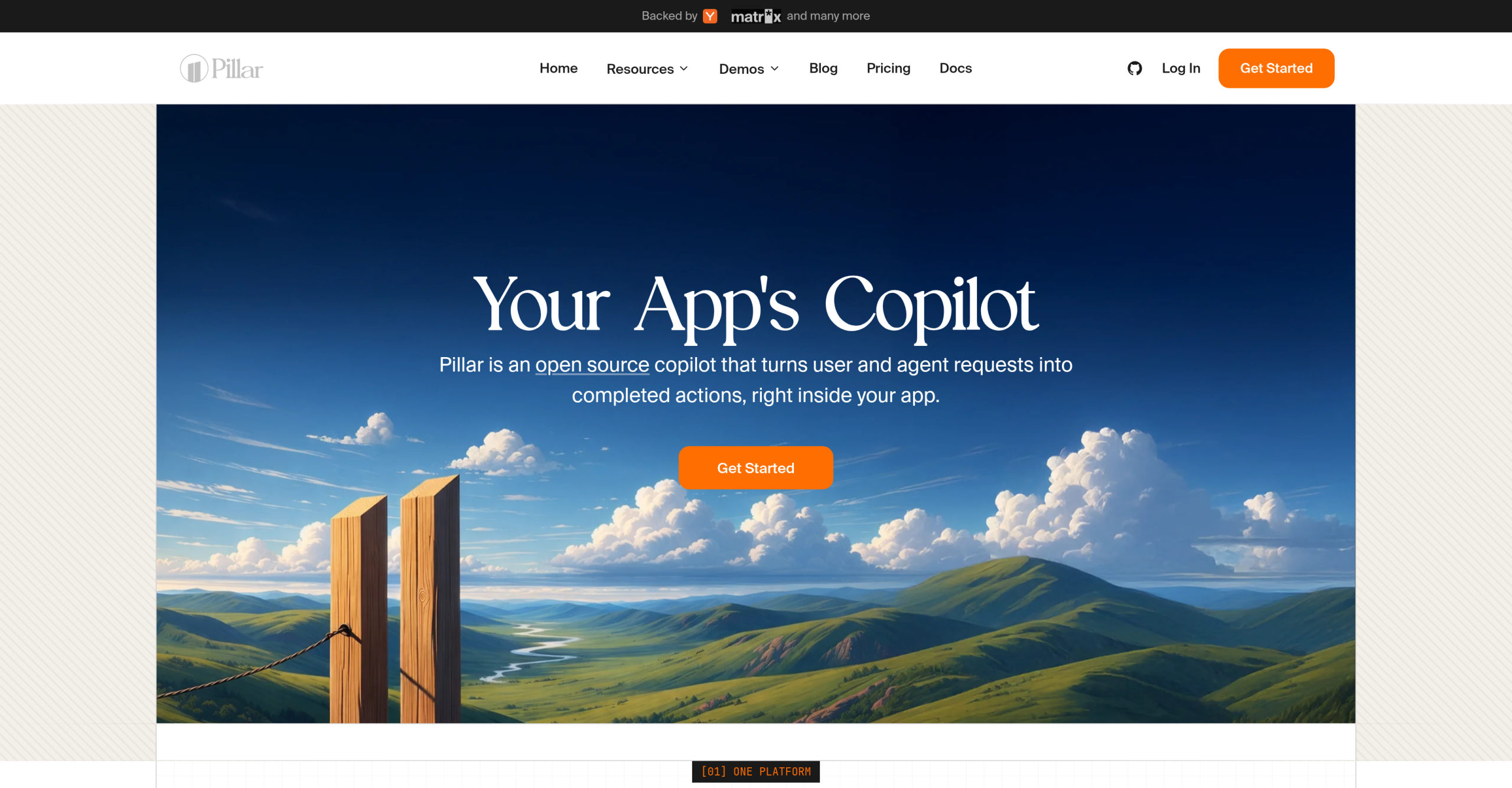
Unlike competing tools, Pillar | App Copilot takes a different approach, aiming to act as an intelligent layer within existing web applications. It’s not just another chatbot; its core function is to perform actions, much like a human user would, but driven by AI. This capability sets it apart from simpler conversational AI interfaces that primarily retrieve information, positioning it closer to tools that offer in-app automation or guided workflows.
The Challenge of Early Adoption
One significant caveat for Pillar | App Copilot is its very recent market entry. Launched on March 5, 2026, it’s a newcomer, meaning there isn’t a substantial body of user reviews, common complaints, or widespread praise available yet. This lack of community feedback makes it challenging to assess its real-world performance and identify common pain points that might emerge with broader usage. Extensive forum discussions or detailed user testimonials just yet, which isn’t unusual for a product this new aren’t available.
Despite this early stage, the tool presents a compelling vision for how AI can interact with web applications. It’s built to address a common problem: users often struggle to find or execute features within an application, leading to support tickets for functionalities that already exist. Pillar aims to bridge this gap by providing an "action layer" for AI agents, allowing product and engineering teams to integrate AI-driven task execution without building complex underlying infrastructure from scratch.
AI-Driven In-App Task Execution
Pillar | App Copilot functions as an open-source product copilot, embedding an AI chat widget directly into web applications. It offers more than answer questions; it understands user intent, formulates multi-step plans, and then performs actions. This includes guiding through pages, pre-filling forms, and calling APIs, mimicking how a user would interact with the application. What’s particularly clever is that this process runs client-side, using the user’s existing session. This eliminates the need for proxy servers or token forwarding, which can be a security and performance concern for many organizations.
it’s geared toward product and engineering teams, founders, VP Product, and Head of Support roles. They’ll find it useful for enabling natural language interaction for task execution within their applications. Imagine a user typing "Send my cleaner $200" in a banking app, or "Close the Walmart deal as won" in a CRM. Pillar aims to make these natural language commands translate directly into application actions. It’s also capable of integrating with existing help content platforms such as Zendesk, Intercom, Notion, and Confluence, grounding its AI responses and actions in relevant documentation.
Technical Foundations and Accessibility
Pillar | App Copilot’s architecture is quite flexible. The core product, including its backend and frontend, is available under an AGPL-3.0 license for self-hosting. In practice, developers can modify and run it, though any modifications used as a service must also be released under AGPL-3.0. Its SDK packages, Though, are MIT-licensed, offering greater freedom for embedding into proprietary applications. This dual licensing approach provides both open-source flexibility and commercial viability.
For self-hosting, its core function is to run with Docker, using docker compose up, with the API on port 8000 and the admin dashboard on port 3000. It provides multi-framework SDKs for popular JavaScript frameworks like React, Vue, Angular, and vanilla JavaScript. The tool also features a managed knowledge base that can ingest data from websites, various file types, cloud storage services (like S3/GCS), and code snippets. A Command Line Interface (CLI) tool scans the codebase for usePillarTool calls to synchronize tool definitions, ensuring that the AI agent’s capabilities are always up-to-date with the application’s features.
Pricing and Deployment Options
Pillar | App Copilot offers both self-hosted and managed cloud options. The self-hosted, open-source version requires users to manage their own infrastructure and updates, with community-based support. People who prefer a hands-off approach, the hosted version at trypillar.com is managed by Pillar, includes automatic updates, and offers priority support. This cloud version uses a usage-based pricing model, starting from $19/month, billed monthly, with a no-refund policy. Commercial licenses are also available for enterprises needing to self-host without the AGPL obligations. note that while usage-based pricing is mentioned for the cloud version, specific details on how usage is measured or what constitutes additional costs aren’t explicitly provided.
Getting Started with Pillar
If you’re considering Pillar | App Copilot, the most useful first action you can take is to explore its open-source GitHub repository. This will give you direct access to the codebase, allowing you to understand its technical implementation and evaluate its suitability for your specific application environment before committing to any deployment. It’ss SDKs and core components there, which is a great starting point.