

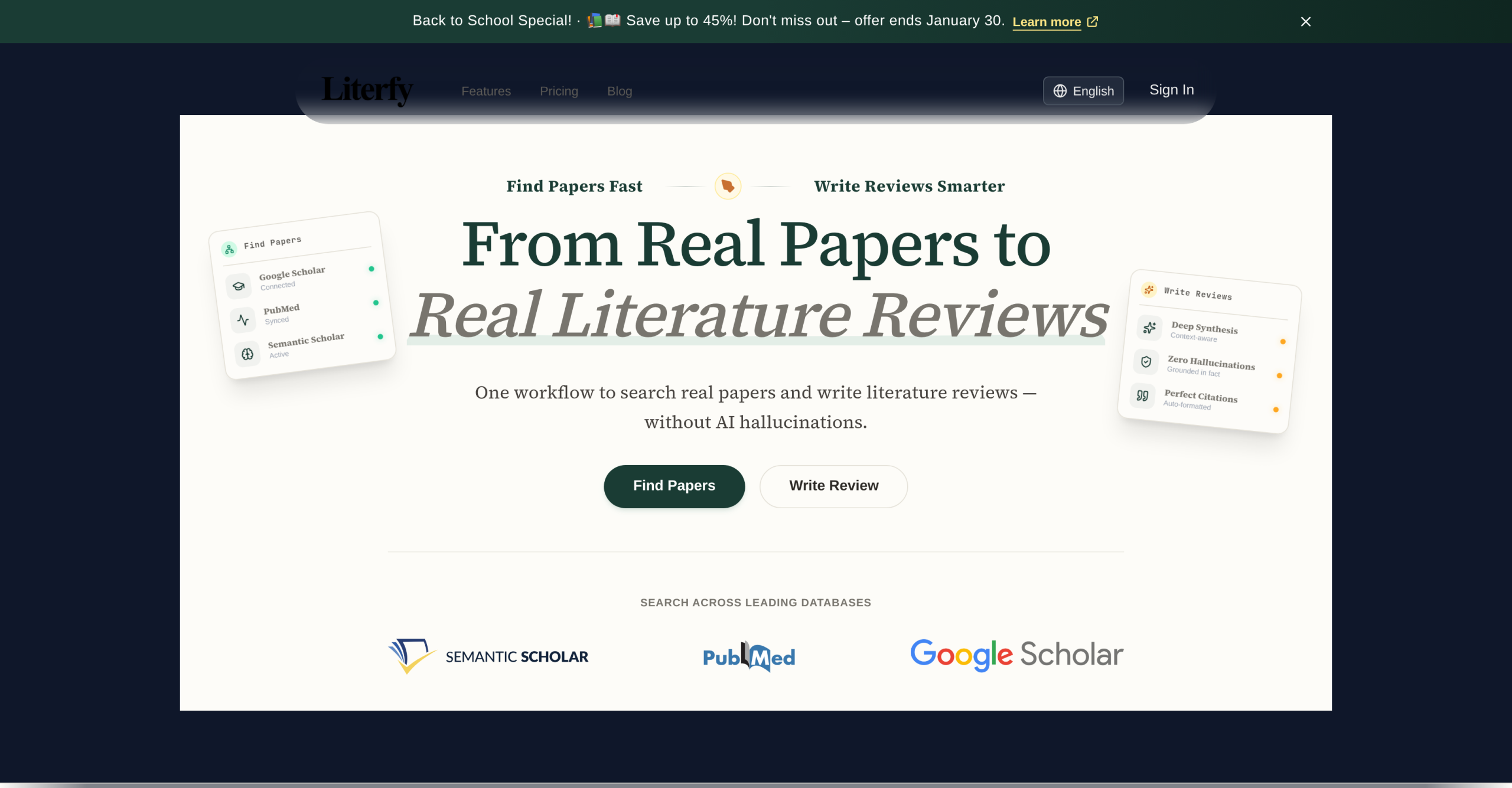
The sheer volume of academic literature can make starting a research project feel overwhelming. Finding and synthesizing relevant papers often consumes a significant amount of time, a challenge Literfy aims to address by streamlining the entire literature review process.
Speeding Up Your Research Discovery
Instead of manually searching across multiple platforms, Literfy brings key academic databases together. It pulls information from sources like Google Scholar, PubMed, and Semantic Scholar into one place, letting you generate search expressions automatically and filter results by year, publication, or citation count. This unified approach is designed to save you hours you’d otherwise spend jumping between different search engines.
What makes Literfy different is its "paper-first review workflow." This means any content it helps you create is directly linked to the academic sources you’ve selected, helping to ensure accuracy and prevent the kind of factual errors sometimes seen with other AI writing tools.
Building Your Review, From Outline to Draft
Once you’ve gathered your papers, Literfy helps you make sense of them. You can organize your research, pinpoint key findings, and group related ideas into themes. The tool can even identify topic clusters, which might help you spot potential gaps in current research.
When it’s time to write, Literfy can generate literature review outlines and draft sections for you. Every statement in these drafts is grounded in your chosen academic papers, with clear links showing exactly where the information came from. This focus on source-backed content is central to its design.
After your review is ready, you’ll find a range of export options. You can save your work in formats like LaTeX, Markdown, Word, or PDF. For citations, it supports BibTeX/Overleaf-ready files and integrates with popular reference managers such as Zotero, Mendeley, and EndNote. You also have the flexibility to choose between different AI models, including Gemini 3 or the Gemini 3 Pro preview, for content generation.
Who Benefits Most from Literfy?
If you’re a researcher, an academic, or a student working on a thesis or dissertation, you’ll likely find Literfy useful. Professionals who conduct evidence-based research can also use it to quickly shortlist relevant papers, draft sections with built-in citations, and export complete literature reviews. It’s built for anyone who needs to efficiently process and organize academic information.
Accessing Literfy: Free Trial and Paid Plans
You can try Literfy with a Free Trial that includes 30 welcome credits. This trial lets you search for papers (2 credits per search), generate one full literature review, export citations in BibTeX/CSV format, and view your project history. There’s no credit card required to start.
For continued use, paid options begin at $12. You can choose a "Light Pack" for one-time credit purchases or opt for "Pro Monthly" plans if you have ongoing research needs.
Literfy does offer a refund policy, but it’s important to note the conditions. You can request a refund within 14 days of purchase, provided your usage has been minimal (fewer than 5 drafts generated, at least 70% of credits unused, no terms violations, and no more than 3 exported contents downloaded).
Important Points to Remember
While Literfy can significantly assist with your literature review, it’s designed as a helper, not a replacement for your own critical thinking. The terms of service stress that you must properly cite all sources, verify the accuracy of the information, and adhere to academic integrity policies. Submitting AI-generated content without substantial modification isn’t allowed. It’s always a good idea to manually review important papers yourself to prevent misinterpretation, as relying too heavily on any AI tool in academic work can carry risks. Public feedback on the tool is currently limited, with one Trustpilot review averaging 3.5 out of 5 stars.