

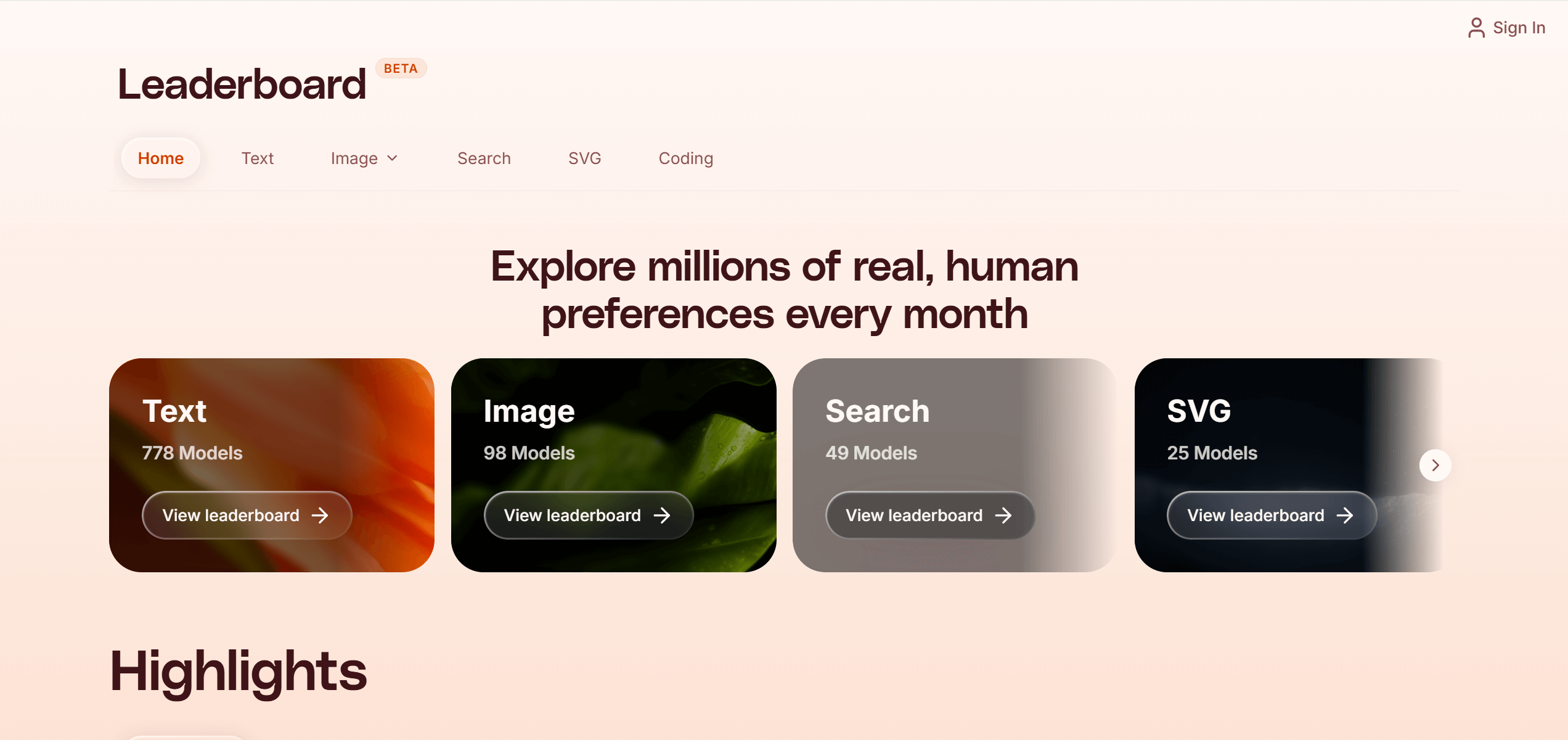
Evaluating the performance of AI models in real-world scenarios presents a significant challenge. Yupp Leaderboard addressed this before shutting down by providing a platform for comparing hundreds of AI models, driven by user feedback rather than static benchmarks. It offered a unique approach — you’d compare models side by side to understanding how different AI systems perform in practice.
Community-Driven AI Model Rankings via Vote-to-Earn
The platform used a metric called the VIBE (Vibe Intelligence BEnchmark) Score, an Elo-like rating system based on the Bradley-Terry model. The score reflected aggregated user preferences from side-by-side comparisons of AI model responses. You could access and compare outputs from major models like ChatGPT, Claude, and Gemini, providing detailed feedback on their preferences. That contributed directly to the models’ evaluation and improvement.
AI Researchers, Model Developers, and Curious Users
Yupp Leaderboard served two main groups:
- General Users and Consumers: You could experiment with and compare various AI models without subscription costs. You’d use it to get multiple AI opinions, make informed decisions, and even earn credits or small monetary rewards for their feedback. Specific applications included generating text, creating images, and producing Scalable Vector Graphics (SVGs).
- AI Developers, Researchers, and Companies: These stakeholders used the leaderboard to track what’s working and its underlying feedback data to gauge model performance in diverse, real-world contexts. It helped them pinpoint model strengths and weaknesses, gather insights into user preferences, and refine their AI systems based on representative and realistic evaluations.
Multi-Model Comparison with Human Preference Data
- Evaluation Methodology: The VIBE Score was central, derived from user preferences through side-by-side comparisons. Users could offer freeform feedback and select specific "traits" to describe their preferences.
- Supported Models: The platform supported over 500 to 800 AI models. It featured leaderboards for text, image, coding, and live models, including a specialized leaderboard for SVG generation that assessed AI coding capabilities.
- Privacy Measures: User chats were private by default, though an option existed to make them public. Private interactions still contributed to the leaderboard in a privacy-preserving manner. Users could also create profiles with demographic information to help tailor AI selections.
- Bias Control: To mitigate brand bias, the platform conducted blind tests where model names were hidden during evaluations.
- Data Sharing: Yupp shared open datasets of public prompts, model responses, and user preferences, aiding researchers and model builders.
Free Platform with Earning Mechanism (Now Discontinued)
Yupp offered free access to a wide range of AI models, including those typically requiring subscriptions. Access was managed through a system of "Yupp credits." Users received initial credits upon signing up (e.g., 5,000 credits) and earned more by providing feedback on AI responses. These earned credits allowed for continued free access to the AI models. In some instances, users could convert credits into cash via platforms like PayPal.
Platform Shut Down in 2025, Data No Longer Updated
A significant limitation is that the Yupp team announced the closure of the project, so it’s no longer actively maintained or available. While users could earn credits, the ability to convert them to cash was inconsistent, with a low hourly return ($1-$5 per hour) and a monthly earning cap of $50. Users also reported models would sometimes generate incorrect, outdated, or misleading answers, especially with misprinted prompts. Some features, like the SVG generation leaderboard, were in early beta stages with limited votes. The tool also held a "Poor" TrustScore of 2.5 out of 5 based on 20 reviews on Trustpilot.