

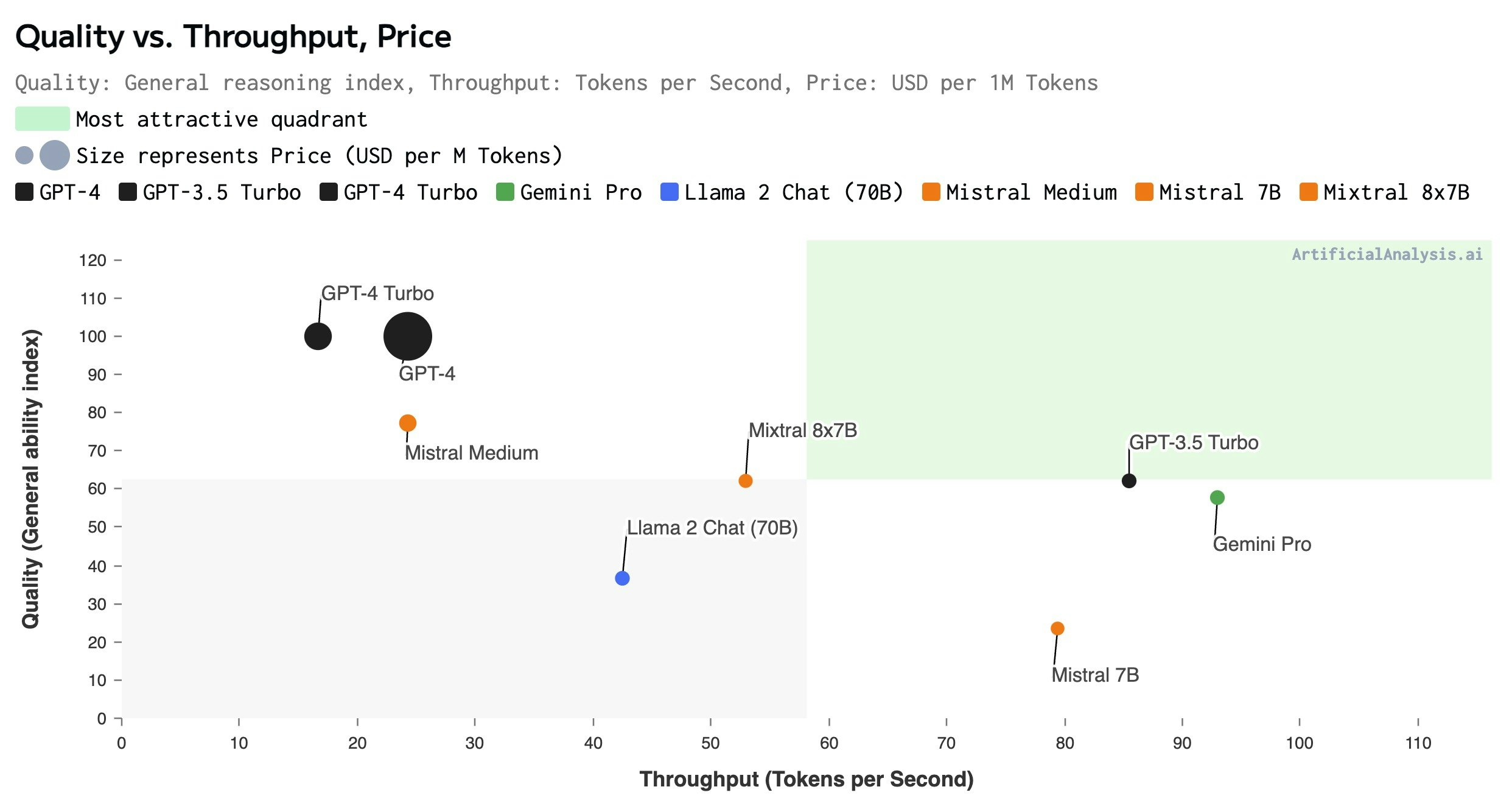
Navigating the rapidly evolving field of Artificial Intelligence models, particularly Large Language Models (LLMs) and chatbots, demands objective data. Artificial Analysis offers a free online platform for independent evaluation and benchmarking of these AI models, helping users make informed decisions based on performance, speed, and cost.
Side-by-Side LLM Benchmark Dashboard with Price/Performance
Choosing the right AI model for a specific application involves more than just looking at headline features. Developers, business leaders, and product strategists need to weigh various trade-offs. Artificial Analysis addresses this by providing transparent comparisons across critical metrics, moving beyond vendor claims to offer data-driven insights.
Speed, Quality, and Cost Metrics Across 100+ Models
The platform provides detailed evaluations across several key performance indicators:
- Intelligence Index: This aggregated score combines results from multiple benchmarks, assessing knowledge, reasoning, math, and code capabilities. The index has undergone significant overhauls to incorporate "real-world" tests and blind pairwise comparisons, using ELO ratings to maintain relevance.
- Price: Compares the cost per million tokens, crucial for budget planning and cost-effectiveness analysis.
- Output Speed: Measures tokens per second, indicating how quickly a model generates responses.
- Latency: Tracks the time to the first token, important for real-time applications.
- Context Window: Shows the maximum number of tokens a model can process, impacting its ability to handle complex or lengthy inputs.
An integrated LLM Price Calculator further assists in estimating costs across different models.
CTOs, AI Engineers, and Procurement Teams
Artificial Analysis serves a diverse user base:
- Developers and ML Engineers use it for precise model selection, filtering by technical metrics like latency, output speed, coding ability, or context window size to integrate models into their applications and inference pipelines effectively.
- Business Leaders and Product Strategists use the tool to assess the cost-effectiveness of AI models, identifying options that offer the best "intelligence per dollar." This supports vendor negotiations, AI budgeting, and understanding broader market trends.
- Organizations generally rely on it to make informed decisions when selecting AI models and API providers, considering various trade-offs for their specific use cases.
- Researchers and general users also find its detailed comparisons valuable for understanding the evolving AI field.
Free Web Dashboard with API Access
Artificial Analysis is a free online tool. While its core comparison features are freely accessible, developers can obtain a free API key. This API allows programmatic access to benchmark scores, pricing, and performance metrics, enabling integration of this data into custom systems.
Benchmarks May Not Reflect Real-World Workload Performance
While Artificial Analysis strives for objective evaluation, the nature of AI benchmarking presents inherent challenges:
- Benchmark Saturation: Leading AI models have become so capable that traditional benchmarks struggle to differentiate them effectively. Artificial Analysis has recalibrated its Intelligence Index to create more "headroom" for future advancements, addressing this "saturation problem."
- Gaming Benchmarks: A general concern in the AI community is that models can be specifically trained to perform well on public benchmarks, which might not always translate to optimal real-world performance for every unique use case.
- Accuracy vs. Hallucination: The tool’s findings indicate that high accuracy in models doesn’t always correlate with low hallucination rates. Some highly accurate models may "guess" rather than abstain when uncertain, leading to confident but incorrect outputs.
- Complex Reasoning: Despite significant advancements, even the most sophisticated AI models still face challenges with complex reasoning tasks, limiting their effectiveness in scenarios requiring deep scientific or logical deduction.
Artificial Analysis provides a valuable, independent resource for navigating the complexities of AI model selection, offering data-driven insights to optimize for both performance and cost efficiency.