

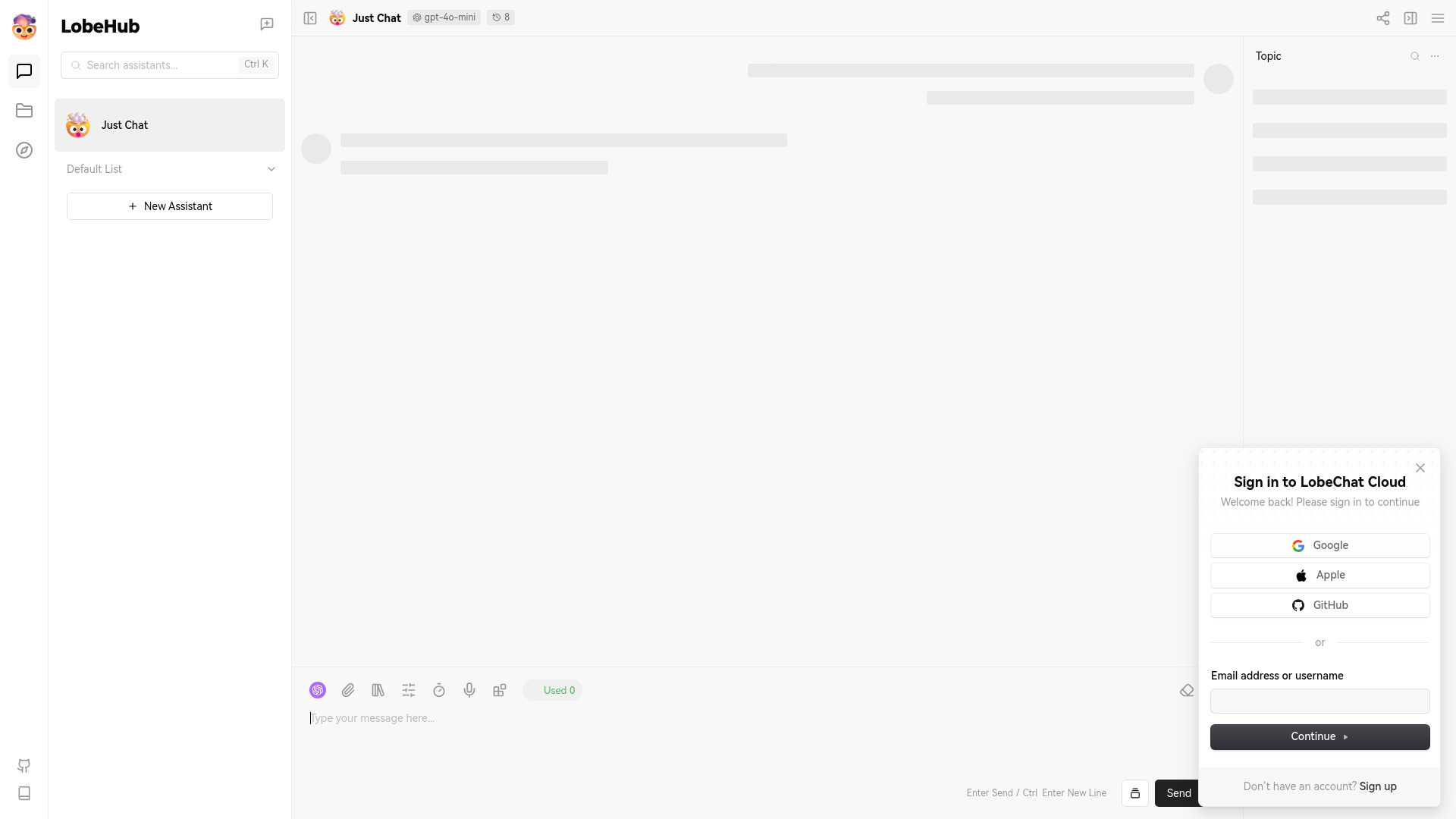
LobeChat acts as a universal remote for AI, consolidating access to a diverse range of Large Language Models (LLMs) into a single, modern interface. It eliminates the need to juggle multiple applications for different AI services, offering a unified platform for interacting with over 42 model providers. This approach allows users to optimize their AI interactions based on factors like cost, speed, or quality, all from one consistent environment.
One Interface for OpenAI, Claude, Gemini, and Ollama
Interacting with various AI models often means navigating different platforms, each with its own quirks. LobeChat addresses this by providing a full-featured framework that supports multimodal interactions, including text, vision (image analysis), and voice (Text-to-Speech and Speech-to-Text). Its design focuses on a polished user experience, featuring elements like Chain of Thought visualization and branching conversations, which enhance the clarity and control of AI dialogues. This makes it particularly useful for those who frequently switch between different AI services or need to compare their outputs.
Plugin Ecosystem, TTS, Multi-Modal Input
LobeChat offers a strong set of features designed to streamline AI workflows:
- Extensive Model Support: Connects to over 42 model service providers, including OpenAI (GPT-4o, GPT-4-vision), Anthropic (Claude series), Google (Gemini series), Groq, Mistral, AWS Bedrock, Ollama (for local models), and many more.
- Multimodal AI: Supports vision capabilities through image uploads for AI analysis, voice interactions via Text-to-Speech and Speech-to-Text, and image generation using plugins for services like DALL-E 3, Midprocess, and Pollinations.
- Extensible Plugin System: Features an ecosystem with over 40 plugins and an agent marketplace offering more than 505 pre-built AI assistants. These extend functionality to include web search, code execution, and integration with various third-party services.
- Knowledge Base Integration: Allows users to upload various file types (documents, images, audio, video) to create custom knowledge bases for Retrieval-Augmented Generation (RAG), enhancing AI responses with specific context.
- Deployment Flexibility: Offers one-click deployment options via platforms like Vercel or Docker, supporting self-hosting for users prioritizing data privacy and control.
- Advanced UI/UX: Provides a modern, responsive design with light/dark themes, Progressive Web App (PWA) support, and unique features like Chain of Thought visualization and artifact rendering (code, HTML, SVG).
Developers, Power Users, and Multi-Model Switchers
LobeChat caters to a wide audience, from individual AI enthusiasts to businesses seeking controlled AI solutions:
- AI Enthusiasts and Power Users: Individuals who manage multiple AI model subscriptions and seek a consolidated interface for testing and comparing LLM outputs.
- Developers and Tech Professionals: Those comfortable with self-hosting applications and managing API keys, looking to build and orchestrate custom AI agents or integrate AI into their workflows.
- Content Creators and Marketers: Can use LobeChat for brainstorming, drafting, fact-checking, and image generation, streamlining creative processes.
- Teams and Businesses: Ideal for developing secure, private AI solutions through self-hosting, building private chatbots for customer support, or creating educational AI agents.
Free and Open-Source; Cloud Version with Usage Fees
The core LobeChat software is open-source and free to use and deploy. However, the cost structure varies depending on the chosen access method:
- Self-Hosted Community Edition: Free to use, but users are responsible for their own hosting costs and any API fees incurred from the AI model providers they utilize. This option provides maximum control and privacy.
- Cloud Version: Offers a free tier that includes a generous amount of compute "Credits" (e.g., 450,000 credits upon registration). Once these free credits are exhausted, users can subscribe to paid plans. Specific pricing for paid plans isn’t publicly detailed but follows a subscription model.
- Third-Party Managed Hosting: Various third-party services offer managed LobeChat hosting, often with free trials or flat monthly rates that cover hosting, updates, and support. These services provide a more hands-off approach for users who prefer not to manage their own deployments.
Setup Complexity and Dependency on Third-Party APIs
LobeChat has certain limitations that self-hosters should anticipate:
- Cloud version costs: Beyond the initial free credits, heavy usage of the LobeChat Cloud version will incur subscription fees and API costs, which can accumulate.
- Evolving ecosystem: The plugin and agent marketplaces are still under active development, meaning some features or integrations might feel experimental or less mature.
- Language support: Some users have noted that the primary focus is on English, which could limit accessibility for non-English speakers.
- Dependency on external LLMs: The core functionality relies on external LLMs, meaning users typically need to provide their own API keys for self-hosted versions, and performance is tied to the external service providers.