

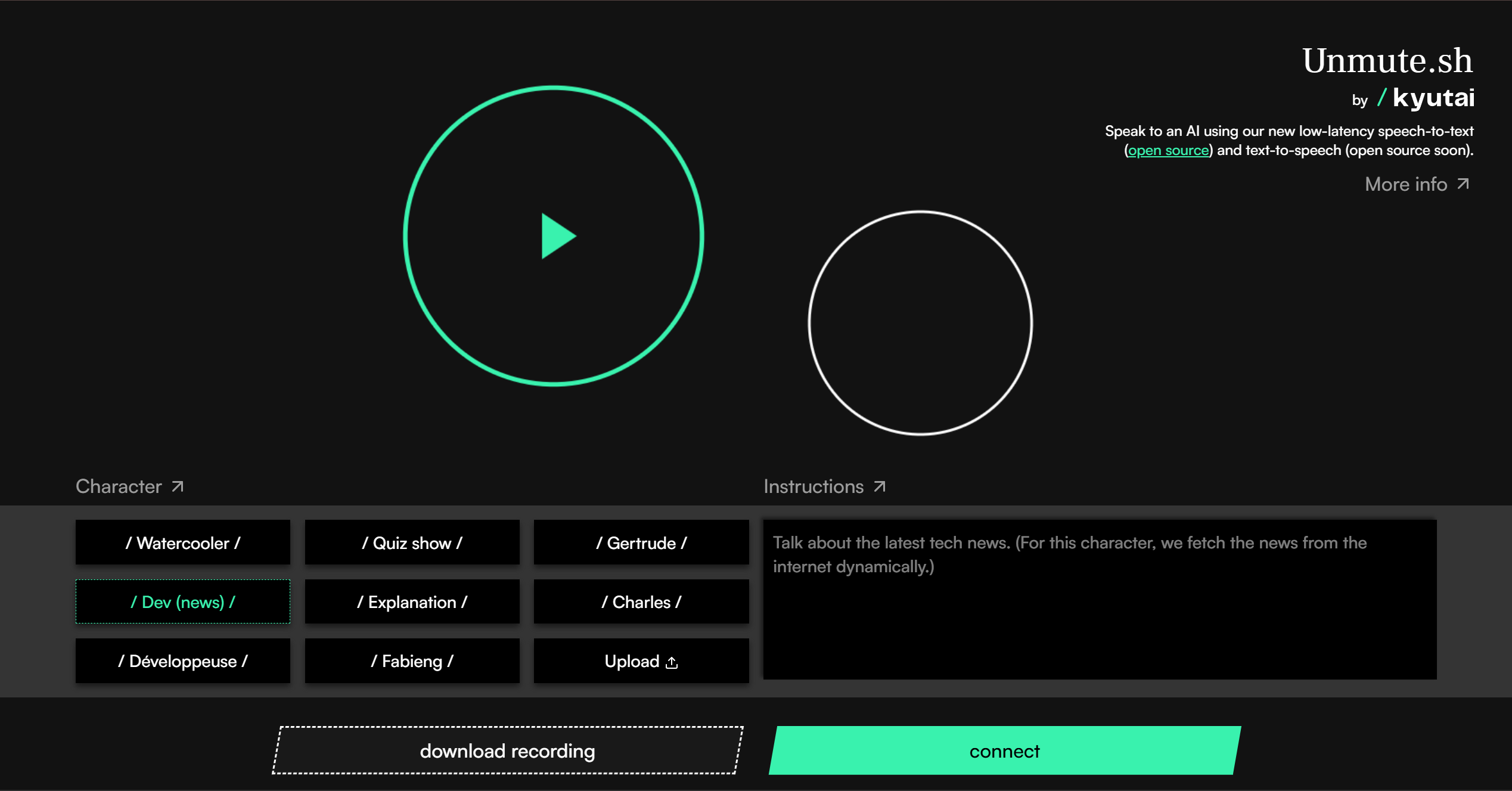
Kyutai TTS, developed by the open-science AI lab Kyutai, offers a capable solution for real-time text-to-speech generation. It stands out by enabling genuinely streaming audio output, beginning speech generation even before the full text input is received. This capability, combined with its open-source nature, positions it as a compelling tool for developers and creators seeking advanced, accessible voice technology.
Why Kyutai TTS Excels in Real-Time Interactions
Many text-to-speech models require complete text input before generating audio, leading to delays. Kyutai TTS overcomes this with its "delayed streams modeling" framework. This innovation allows it to produce speech with ultra-low latency, making it particularly effective for interactive applications. The Kyutai TTS 1.6B model can achieve a 220ms latency from text input to audio start for single users, and under 350ms for 32 concurrent users on a single L40 GPU. Its smaller counterpart, Kyutai Pocket TTS, pushes this further, reaching sub-50ms latency.
220ms Latency, 10-Second Voice Cloning, and Long-Form Audio
Kyutai TTS provides a range of features designed for flexibility and performance:
- Models: Two primary models are available: Kyutai TTS 1.6B (1.6 billion parameters, released July 2025) and Kyutai Pocket TTS (100 million parameters, released January 2026).
- Voice Cloning: The tool can clone voices from audio samples as short as 10 seconds, capturing tone, rhythm, and even recording quality. This feature is useful for personalizing AI voices.
- Long-Form Audio: It handles extended audio generation without degradation, surpassing the typical 30-second limitations found in many other TTS models.
- Language Support: Kyutai TTS 1.6B supports English and French. Kyutai Pocket TTS expands this to include English, French, German, Spanish, Portuguese, and Italian.
- Underlying Technology: It utilizes a custom neural audio codec called Mimi and the Delayed Streams Modeling (DSM) framework.
- Deployment Flexibility: Kyutai TTS 1.6B is designed for server deployment, typically requiring a GPU. Kyutai Pocket TTS is lightweight enough to run on a CPU, including consumer hardware, and can operate offline.
- Integrations: It’s open-sourced on HuggingFace, integrates with Kyutai’s Unmute system, and offers a Python SDK (Moshi) and Rust server with Docker support. Community-driven WebAssembly implementations also exist for in-browser use.
- Output Details: The system provides word-level timestamps, beneficial for real-time subtitles or managing interruptions in conversational AI.
Content Creators, AI Phone Agents, and Accessibility
Kyutai TTS supports researchers, developers, and accessibility teams:
- Content Creators: Ideal for podcasts, YouTube AI sidekicks, and voiceovers, offering natural-sounding speech.
- Enterprises: Suitable for AI phone agents (receptionists, sales), interactive learning tools, and accessibility applications like screen readers.
- Gaming and Interactive Media: Its low latency makes it valuable for dynamic in-game dialogue.
GPU Requirements, Limited Languages, and Voice Cloning Ethics
Kyutai TTS has specific constraints worth knowing before committing:
- Hardware Requirements: The larger Kyutai TTS 1.6B model generally requires a GPU for optimal performance, which might be a barrier for some users.
- Voice Selection: Some users have reported difficulties in easily changing or selecting different voices within certain implementations, indicating potential areas for improved user experience.
Fully Free and Open-Source
Kyutai TTS is an open-source project and is entirely free to use. This aligns with Kyutai’s commitment to open science, making advanced text-to-speech technology accessible without subscription fees or vendor lock-in. You can explore the project and its resources at https://kyutai.org/next/tts.